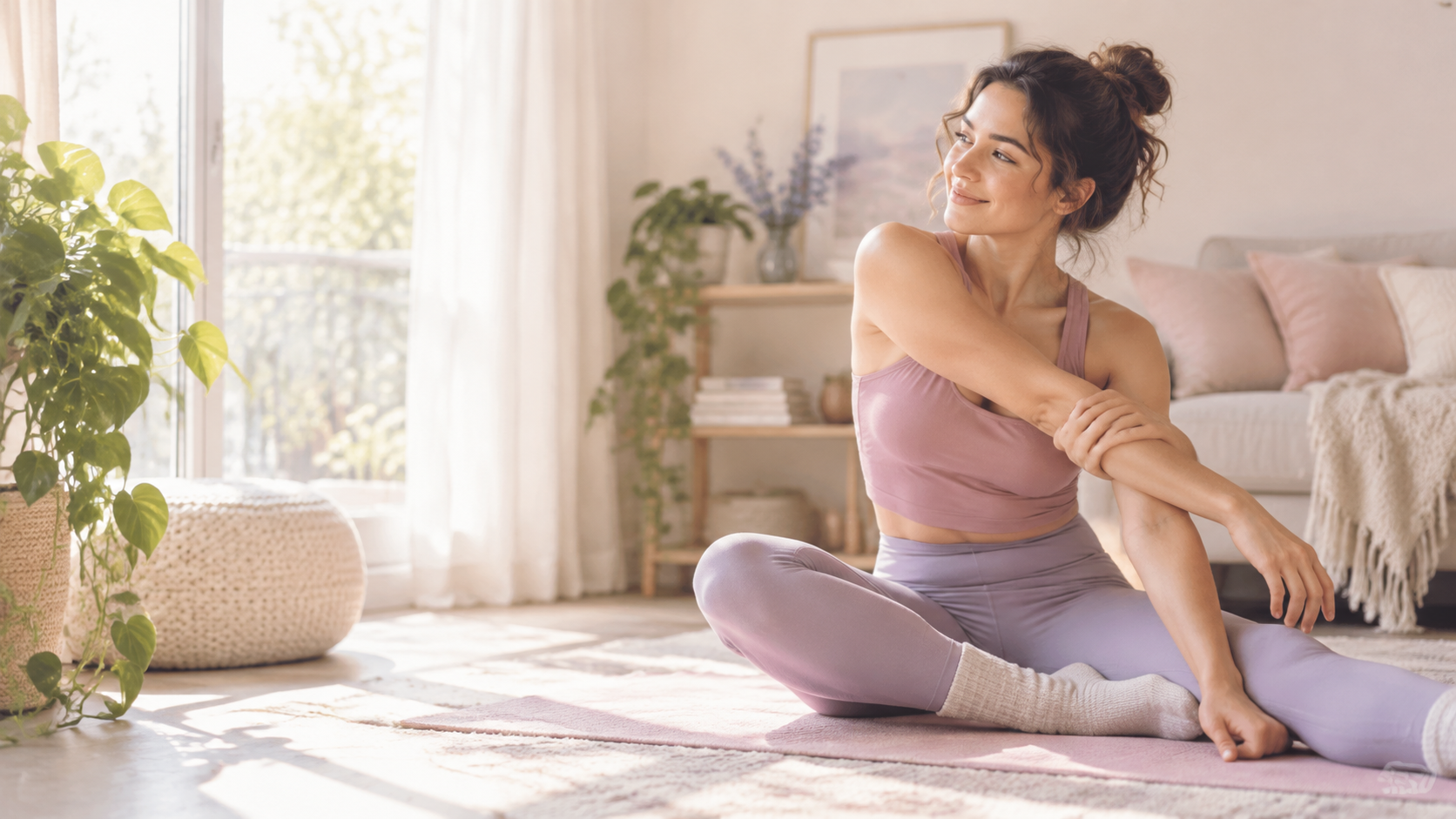
Set up a safe space
You need a clear path of about four to six steps in each direction, or a hallway. Keep a chair or wall nearby for balance, move breakables out of the way and wear shoes with grip. Indoor walking needs no equipment and works well in short bursts, which makes it a practical home workout.
A simple indoor circuit
Repeat this cycle two or three times: walk the space for two minutes at an easy pace, march on the spot for one minute, take a slow lap with gentle arm swings for two minutes, then rest for one minute. Adjust the length of each block to suit your energy.
- Add knee lifts or heel raises during march blocks if you feel comfortable.
- Swing your arms gently to raise your heart rate without strain.
- Hold a chair for support during any balance-based movement.
- Stop when you need to. A shorter session still counts.
Add variety without pressure
Mix in a few seated or wall-supported movements such as leg extensions, shoulder rolls or wall push-ups to balance the routine. Keep the same plan for two weeks before changing it, so you can notice how it feels.
Common questions
Is an indoor walking workout as good as walking outside?
It is a different experience. Outdoor walking adds distance and variety, while indoor walking is useful on wet days, hot days or when time is limited. Both can be part of a movement habit.
How many steps does an indoor walk give?
Step counts vary with space and pace. Instead of chasing a number, track minutes and how consistently you move.
Is indoor walking safe if I have joint pain?
Choose a pace and surface that feel comfortable, and stop if pain is sharp or unusual. Speak with a health professional for personalised advice.